Decorative Floor Register Guide: Laser-Cut Patterns, Finishes & Sizing (2026)
If you've ever walked into a beautifully renovated home and noticed that even the floor vents look intentional — matching the hardware, complementing the flooring, adding a design accent rather than an eyesore — you've seen decorative floor registers at work.
Standard stamped-steel registers do the job, but they do it anonymously. Decorative registers do the same job while making a statement. And for HVAC distributors and contractors, they carry significantly higher margins than commodity registers.
This guide covers everything you need to know: pattern styles, finish options, sizing, material choices, and how to source decorative registers at factory-direct pricing.
What Makes a Register "Decorative"?
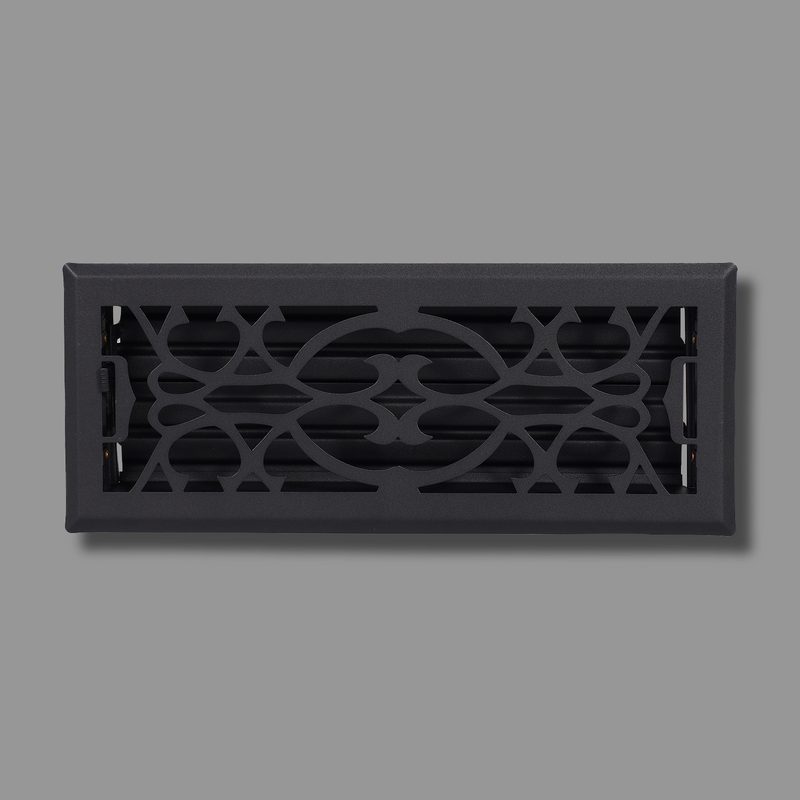
A decorative register differs from a standard register in three ways: the face pattern (laser-cut or cast designs vs plain stamped steel), the finish (powder-coated colors or plated metals vs raw white/brown), and the construction quality (heavier gauge steel, tighter tolerances, smoother edges).
The damper mechanism underneath is typically the same — adjustable louvered blades controlled by a lever. The difference is entirely above the floor line, which is exactly where homeowners and interior designers care most.
Laser-Cut Patterns: The Three Most Popular Designs
1. Victorian Scroll
The classic ornamental pattern with flowing curves and symmetrical scrollwork. This is the most popular decorative register pattern globally, suitable for traditional homes, Victorian-era renovations, and colonial-style interiors. The organic curves soften the industrial look of a floor vent.
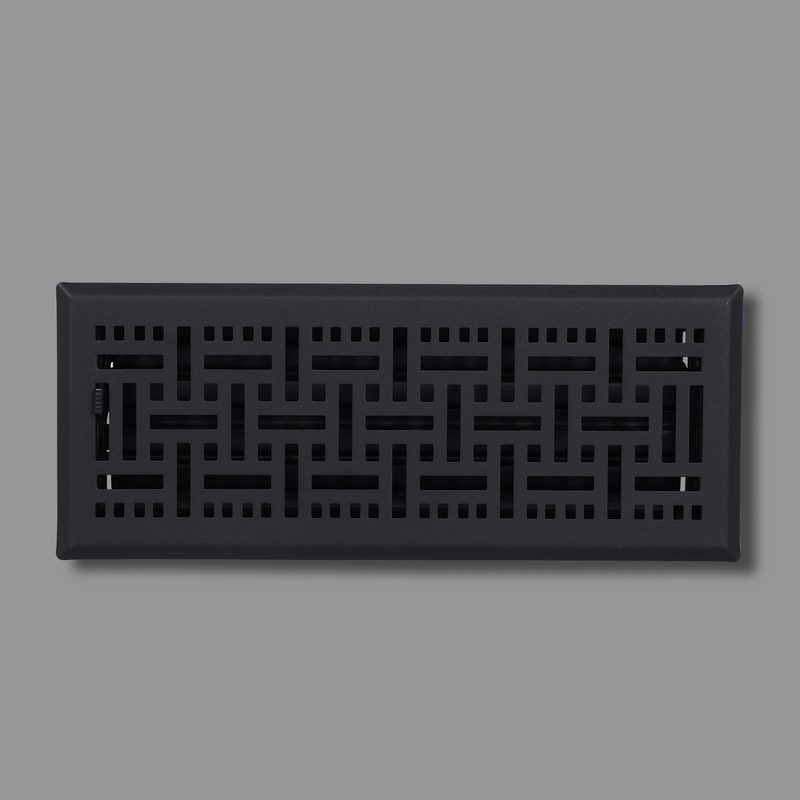
2. Woven / Basket Weave
A geometric pattern that mimics interlocking woven strips. This design works in both traditional and modern interiors — its clean geometry reads as contemporary, while the woven texture adds warmth. It's particularly popular in mid-century modern and transitional homes.
3. Straight Blade / Contemporary
Clean horizontal lines that look similar to a standard register but with a premium finish and heavier construction. This is the most versatile pattern — it works in any interior style and doesn't draw attention to itself. The upgrade is in the finish quality and material weight, not the pattern.
Finish Options: Matching Your Hardware
The finish is where decorative registers really differentiate. Homeowners and designers select finishes to match door hardware, light fixtures, cabinet pulls, and faucets. Here's what's available:
| Finish | Best For | Interior Styles | Trend Status (2026) |
|---|---|---|---|
| Matte Black | Modern farmhouse, industrial, minimalist | Farmhouse, Industrial, Scandinavian | 📈 #1 most popular |
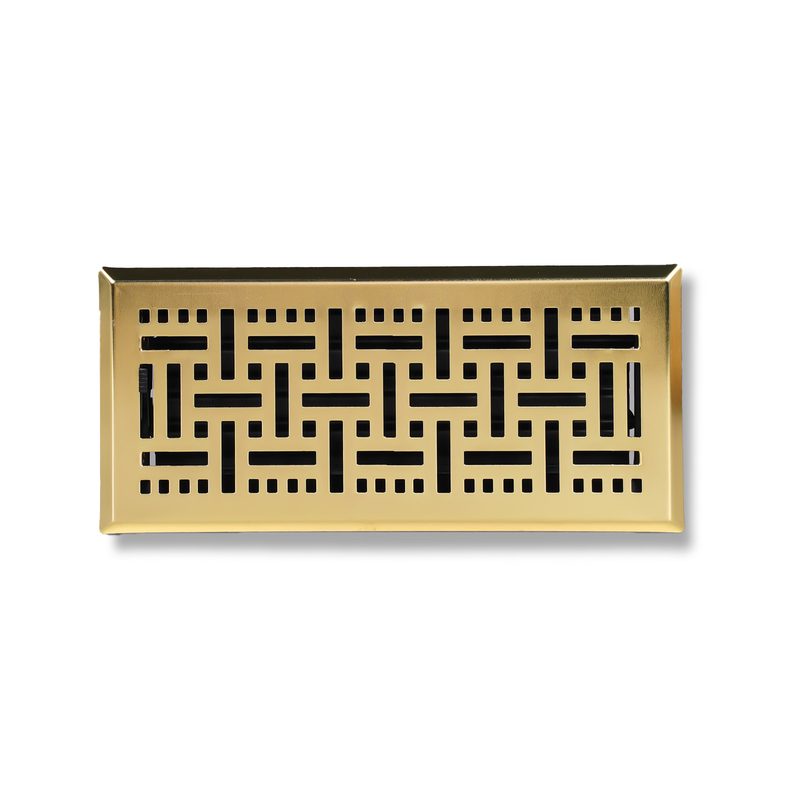
| Antique Brass | Traditional, luxury, warm interiors | Traditional, Colonial, Luxury | 📈 Growing fast |
| Satin Nickel | Transitional, contemporary, cool tones | Transitional, Contemporary | → Steady |
| Rose Gold / Champagne | High-end residential, feminine spaces | Glam, Art Deco, Luxury | 📈 Emerging trend |
| Oil-Rubbed Bronze | Rustic, craftsman, traditional | Craftsman, Tuscan, Lodge | → Steady |
Two-Tone Registers: Frame + Blade Combinations
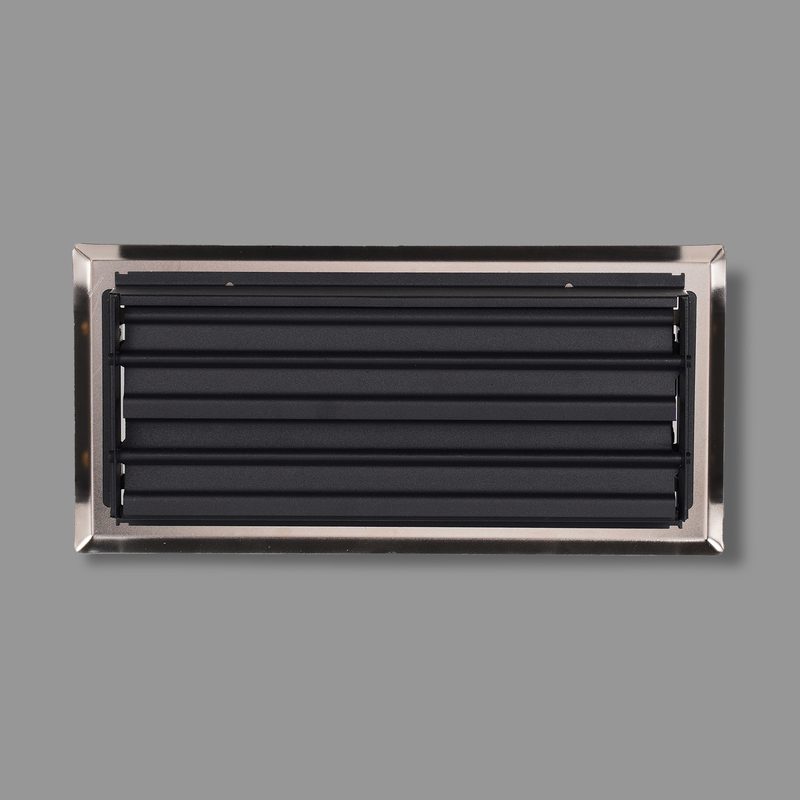
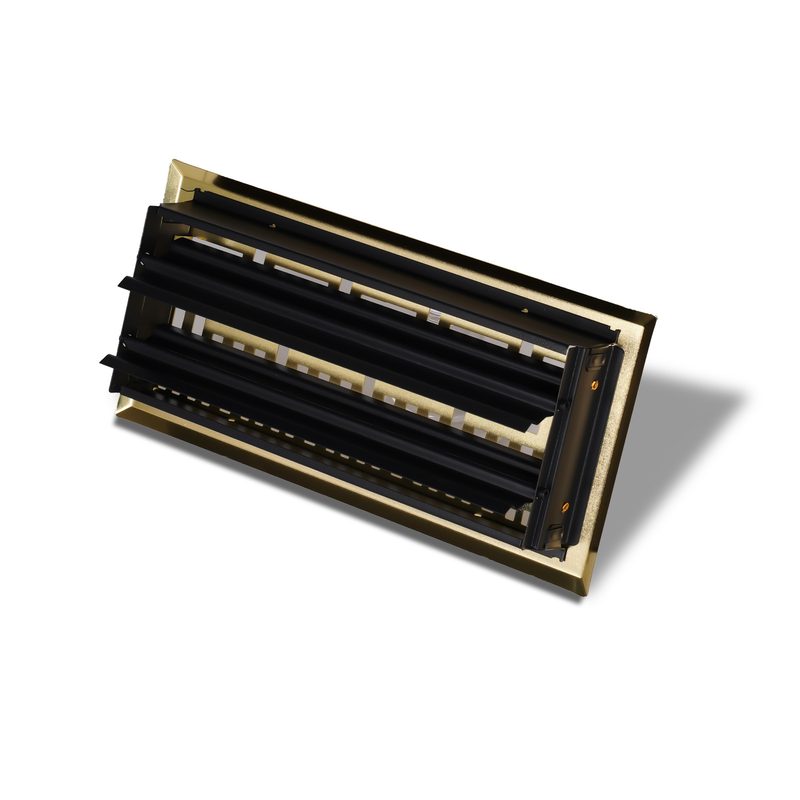
A growing trend in 2025-2026 is two-tone registers — a metallic frame (satin nickel or antique brass) with contrasting black damper blades. This creates a more premium, layered look than a single-color finish.
The satin nickel frame with black blades is particularly popular in kitchens and bathrooms where stainless steel appliances meet dark cabinetry. The brass frame with black blades suits luxury dining rooms and entryways.
Sizing Guide: Standard Decorative Register Sizes
Decorative registers use the same duct opening sizes as standard registers. The face (visible part) is approximately 1.5-2 inches larger than the duct opening in each dimension.
| Duct Opening | Overall Face Size (approx.) | Common Application |
|---|---|---|
| 4 × 10 in. | 5.5 × 11.5 in. | Most common residential |
| 4 × 12 in. | 5.5 × 13.5 in. | Residential, hallways |
| 4 × 14 in. | 5.5 × 15.5 in. | Living rooms, bedrooms |
| 6 × 10 in. | 7.5 × 11.5 in. | Larger residential rooms |
| 6 × 12 in. | 7.5 × 13.5 in. | Master bedrooms, great rooms |
| 6 × 14 in. | 7.5 × 15.5 in. | Large living areas |
| 2 × 12 in. | 3.5 × 13.5 in. | Toe-kick, under-cabinet |
Material & Construction: What to Look For
Not all decorative registers are created equal. Here's what separates quality from cheap imitations:
Laser-cut steel (our manufacturing method) produces clean, burr-free edges with consistent pattern accuracy. The steel is typically 20-22 gauge, powder-coated for durability. Laser cutting allows intricate patterns that stamping cannot achieve.
Cast iron is the traditional decorative register material — heavy, durable, and premium-feeling. However, cast iron registers are significantly heavier and more expensive to ship. They're best for high-end restoration projects.
Die-cast zinc is a lighter, cheaper alternative that mimics cast iron's look. The patterns are less sharp and the material is more brittle, but the price point is attractive for budget renovations.
For Distributors: Why Decorative Registers Are a High-Margin Product
Standard white steel registers are a commodity — price-driven, low margin, interchangeable between suppliers. Decorative registers are the opposite:
Higher ASP: A decorative register sells for 3-8× the price of a standard register. A 4×10 standard register wholesales at $3-5; the same size in laser-cut matte black wholesales at $15-25.
Less price transparency: Homeowners don't comparison-shop decorative registers the way they do standard ones. The design, finish, and brand matter more than the lowest price.
Upsell opportunity: Every home has 8-15 floor registers. Converting a customer from standard to decorative across the entire house is a 10-30× revenue increase on that line item.
Repeat orders: Renovation contractors and interior designers reorder the same patterns across multiple projects.
Sourcing Decorative Registers from China
As a manufacturer with 30 years of experience and our own laser-cutting equipment, Airwise offers factory-direct decorative registers with several advantages:
Custom patterns: Send us a DXF/DWG file and we laser-cut your exclusive pattern. MOQ for custom patterns starts at 500 pieces.
Custom finishes: Beyond our standard 4 finishes, we can match any RAL color or Pantone for orders of 1,000+ pieces.
Private labeling: Your brand, your packaging, your insert cards. We handle the production, you handle the market.
Competitive pricing: Factory-direct eliminates the middleman margin. Our pricing structure supports distributor margins of 40-60% at retail.
Decorative Floor Registers — FAQ
What is the difference between a decorative register and a standard register?▾
Standard registers use plain stamped-steel faces with simple louvered blades. Decorative registers feature laser-cut or cast-iron faces with ornamental patterns (Victorian scroll, basket weave, Art Deco) and come in premium finishes like matte black, antique brass, satin nickel, and rose gold. Both function the same way — the difference is purely aesthetic.
What are the most popular decorative register finishes?▾
Matte black is the most popular finish in 2024-2026 — it matches modern farmhouse, industrial, and contemporary interiors. Antique brass/gold is second for traditional and luxury homes. Satin nickel suits transitional spaces, and rose gold/champagne is trending for high-end residential projects.
Can decorative registers be used for both supply and return air?▾
Most decorative floor registers have adjustable damper blades built in, making them suitable for supply air. For return air, you need a decorative grille (no damper) or a filter grille. Check the product listing to confirm whether a damper is included.
What sizes do decorative floor registers come in?▾
Common sizes: 4×10 in., 4×12 in., 4×14 in., 6×10 in., 6×12 in., 6×14 in., and 2×12 in. The size refers to the duct opening (not the overall face size, which is about 2 inches larger). View our full range.
Are laser-cut registers more expensive than stamped registers?▾
Yes, typically 3-8× the price of basic stamped steel registers. A standard white steel register costs $3-8 wholesale; a laser-cut decorative register costs $15-40 depending on finish and pattern. The margin for distributors is significantly higher on decorative registers.
Need a custom pattern or finish?
Send us your design — laser-cut steel, any finish, MOQ 500 pcs. Quote within 12 hours.